Welcome to SEMIP Platform

Manage construction materials, analyse lifecycles, and optimise logistics for a sustainable future.

About SEMIP

The Secondary Material Information Platform (SEMIP) is a digital knowledge and decision-support platform developed under the CABE - Circular Approaches for the Built Environment project by Hacettepe University and ENSENSEI. SEMIP is designed to transform how construction, demolition, and disaster-related materials are understood, managed, and reintegrated into the built environment.

At its core, SEMIP addresses one of today's most urgent urban challenges: the vast amount of construction and demolition waste (CDW), which is often treated as a burden rather than a resource. Building on CABE's vision, the platform supports the transition from linear consumption models to circular systems by enabling materials to be tracked, evaluated, and reused as valuable secondary resources.

SEMIP brings together material passports, building data, lifecycle assessment (LCA), and circularity criteria within a single integrated environment. Through this structure, users can explore the full lifecycle of building materials - from their origin and composition to their reuse potential and environmental impact. The platform allows architects, engineers, planners, researchers, and decision-makers to make informed, data-driven choices that reduce waste, lower carbon emissions, and improve resource efficiency.
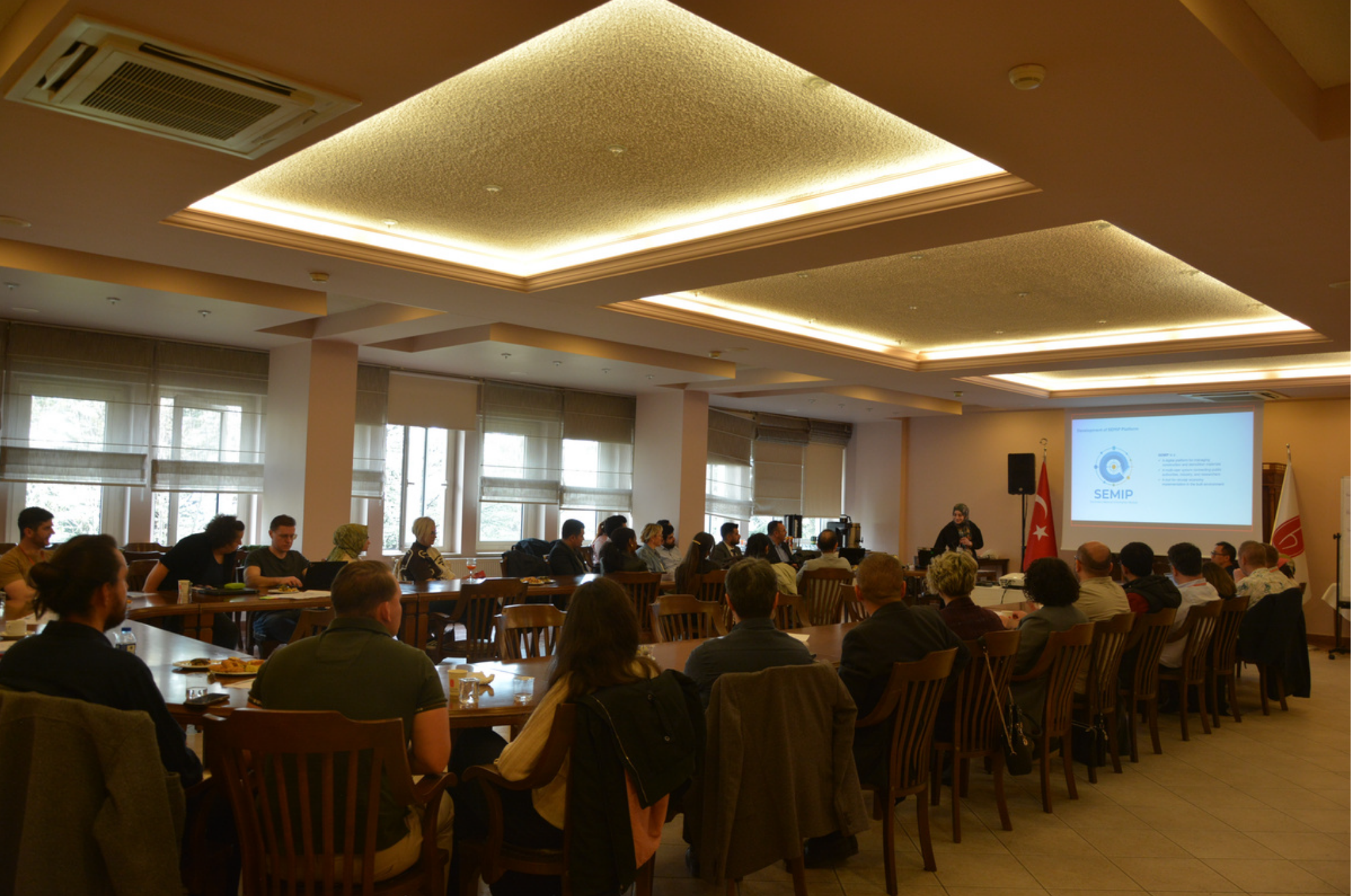
SEMIP circular built environment visual

A key strength of SEMIP lies in its ability to bridge digital technologies with real-world urban challenges, including post-disaster scenarios. By incorporating data from case studies, such as building-scale material inventories and demolition processes, SEMIP enables the simulation of alternative end-of-life scenarios, supporting strategies such as reuse, high-value recycling, and circular reconstruction.

Developed within the international CABE framework, SEMIP contributes to a broader ecosystem of digital tools - such as urban building cadastres and material passports - that empower cities to adopt circular economy principles. Insights generated through SEMIP align with CABE's pilot applications across Switzerland, Slovenia, and Turkiye, ensuring that the platform is grounded in practical application and real urban conditions.

Therefore, SEMIP aims to turn waste into opportunity. By making material flows visible, measurable, and actionable, the platform supports more resilient, sustainable, and economically viable urban development. It not only enhances decision-making processes but also fosters collaboration among stakeholders, paving the way for a regenerative built environment.

SEMIP circular built environment visual